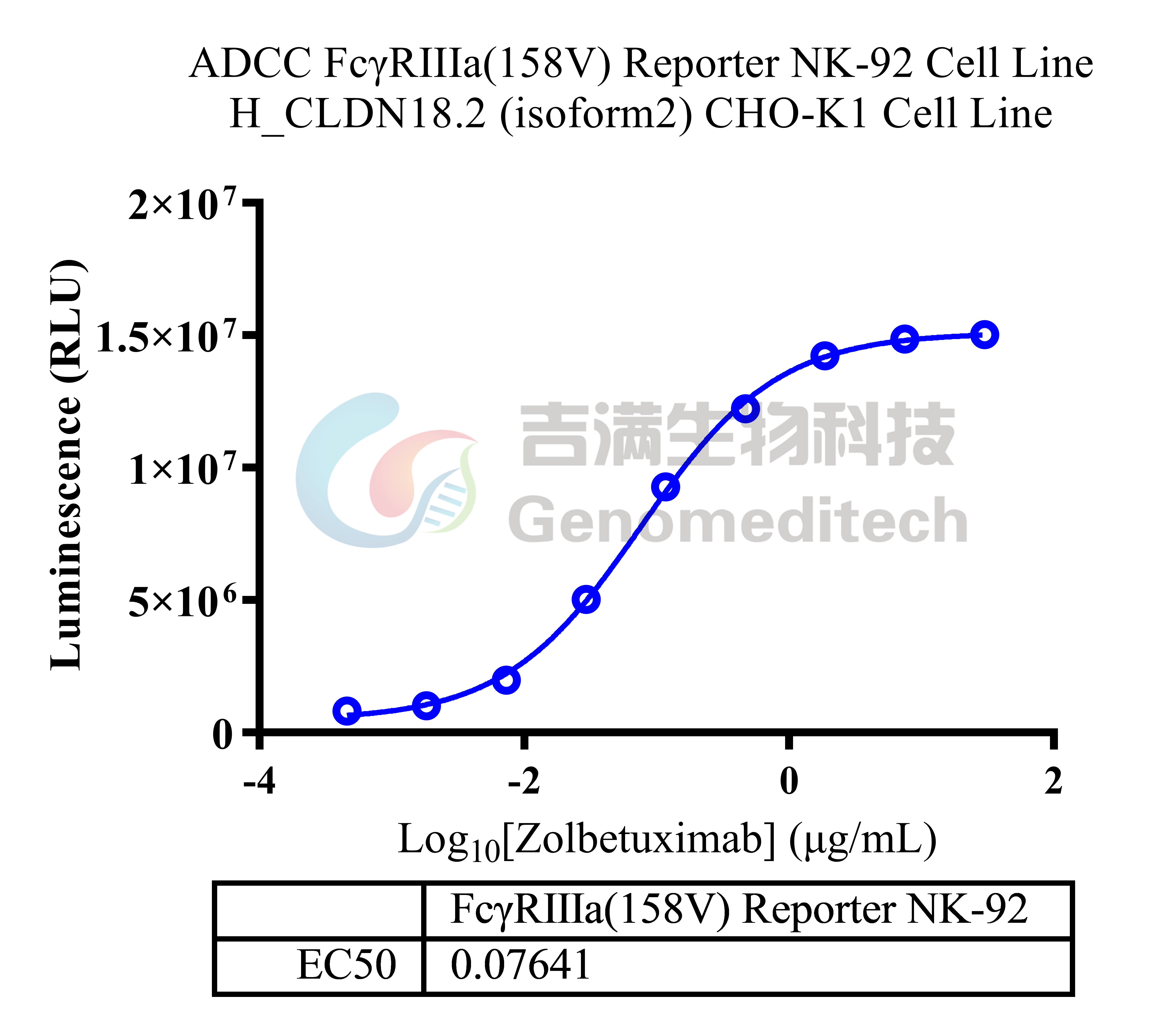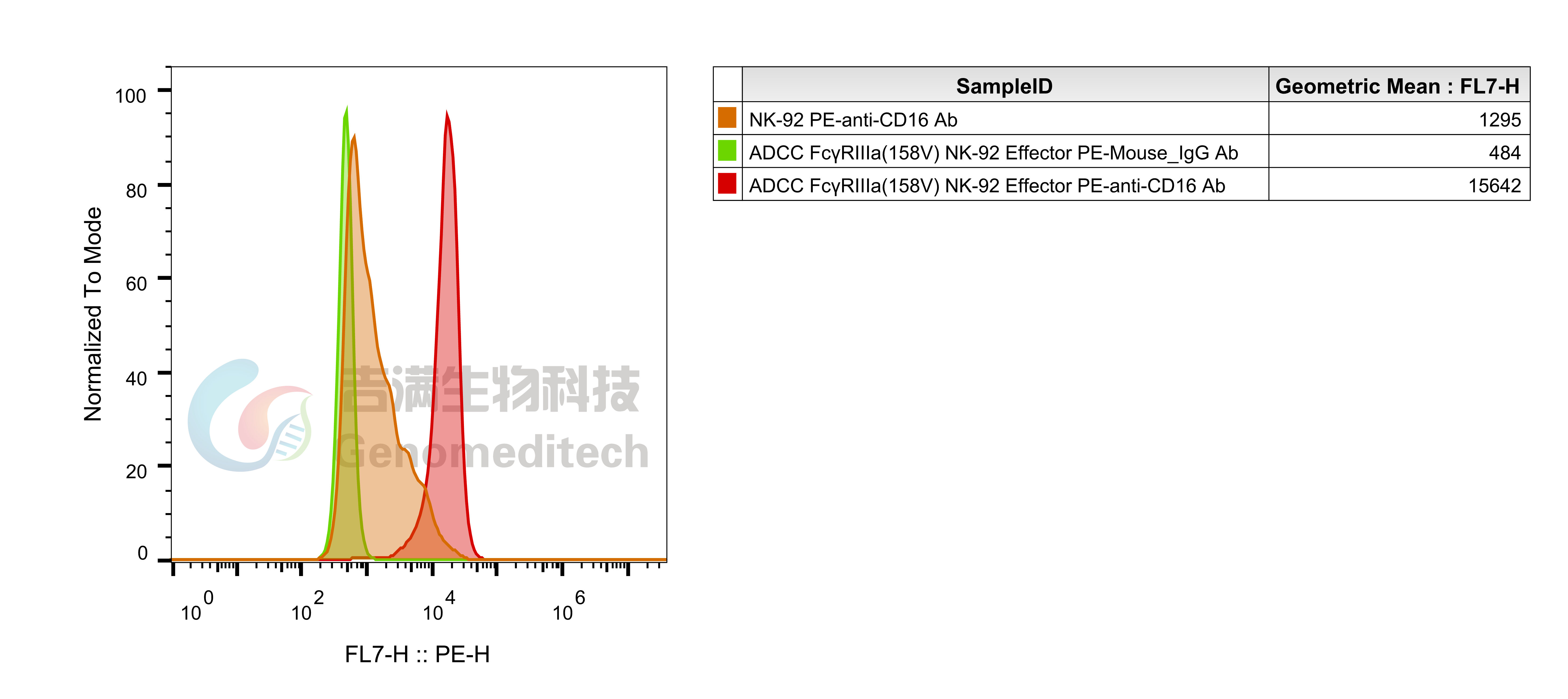
















| Cat. No: GM-C34558 Product: ADCC FcγRIIIa(158V) Reporter NK-92 Cell Line Antibody-dependent cell-mediated cytotoxicity (ADCC) refers to the process by which immune cells expressing Fc receptors recognize the Fc region of antibodies and directly kill target cells bound by these antibodies. Today, the ADCC mechanism is widely used to evaluate the efficacy of antibodies and target cells. When an antibody binds to the target antigen on a cell surface, its Fc region can also bind to FcγRIIIa receptors on effector cells—primarily natural killer (NK) cells—leading to cross-linking of the two cell types and activation of the ADCC signaling pathway. The ultimate outcome of this pathway is the lysis of the target cell, which serves as a key endpoint in classical ADCC bioassays. Traditional ADCC assays use donor-derived peripheral blood mononuclear cells (PBMCs) or NK cell subsets as effector cells, but these cells exhibit significant variability, are difficult to prepare, and often generate high background signals. ADCC FcγRIIIa(158V) Reporter NK-92 Cell Line is a clonal stable NK-92 cell line constructed using non-viral transfection, constitutive expression of the FcγRIIIa (158V) gene, along with signal-dependent expression of a luciferase reporter gene. When antibodies bind to target cells, FcγRIIIa-mediated signaling activates reporter gene expression, resulting in a quantifiable luminescent signal. | 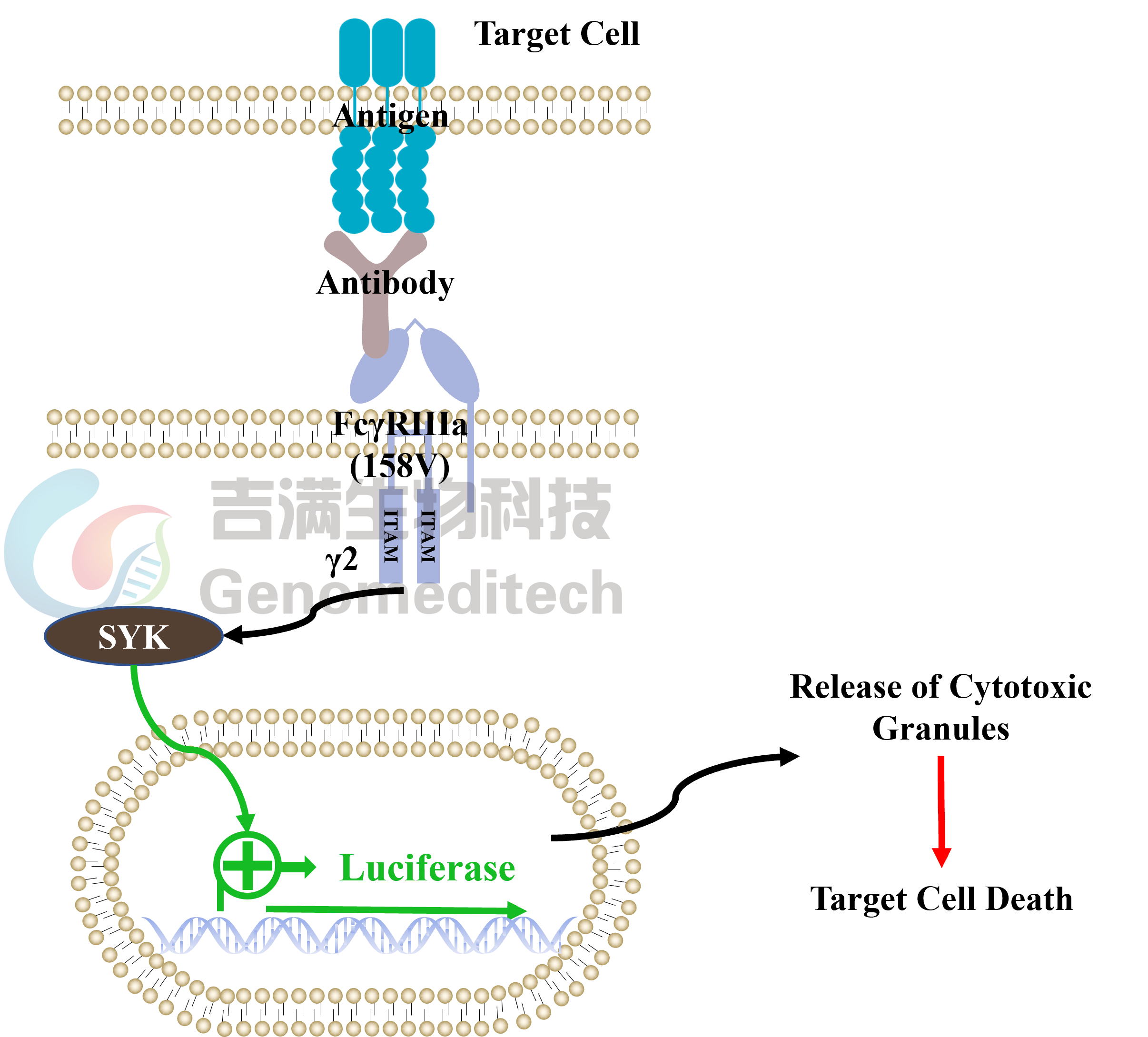 |